
Last updated November 23, 2026
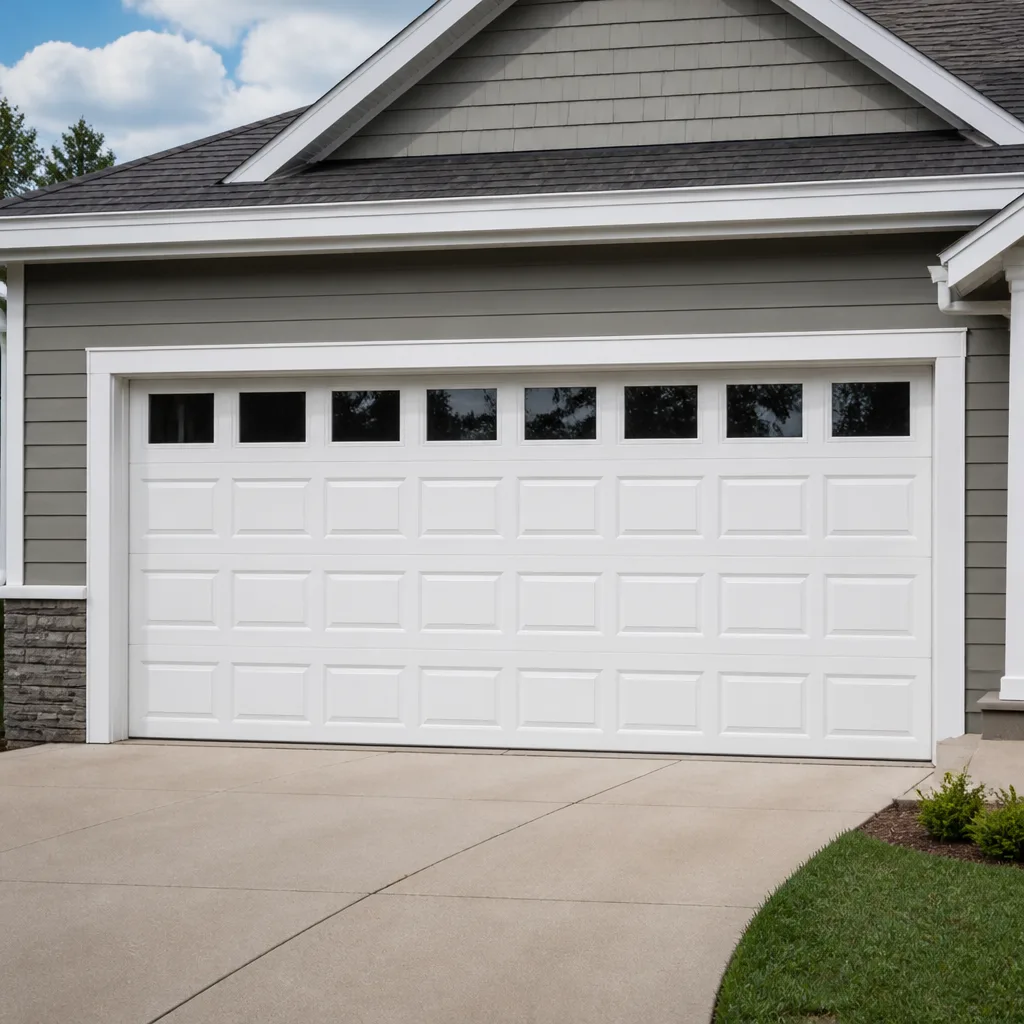 Raised-panel steel
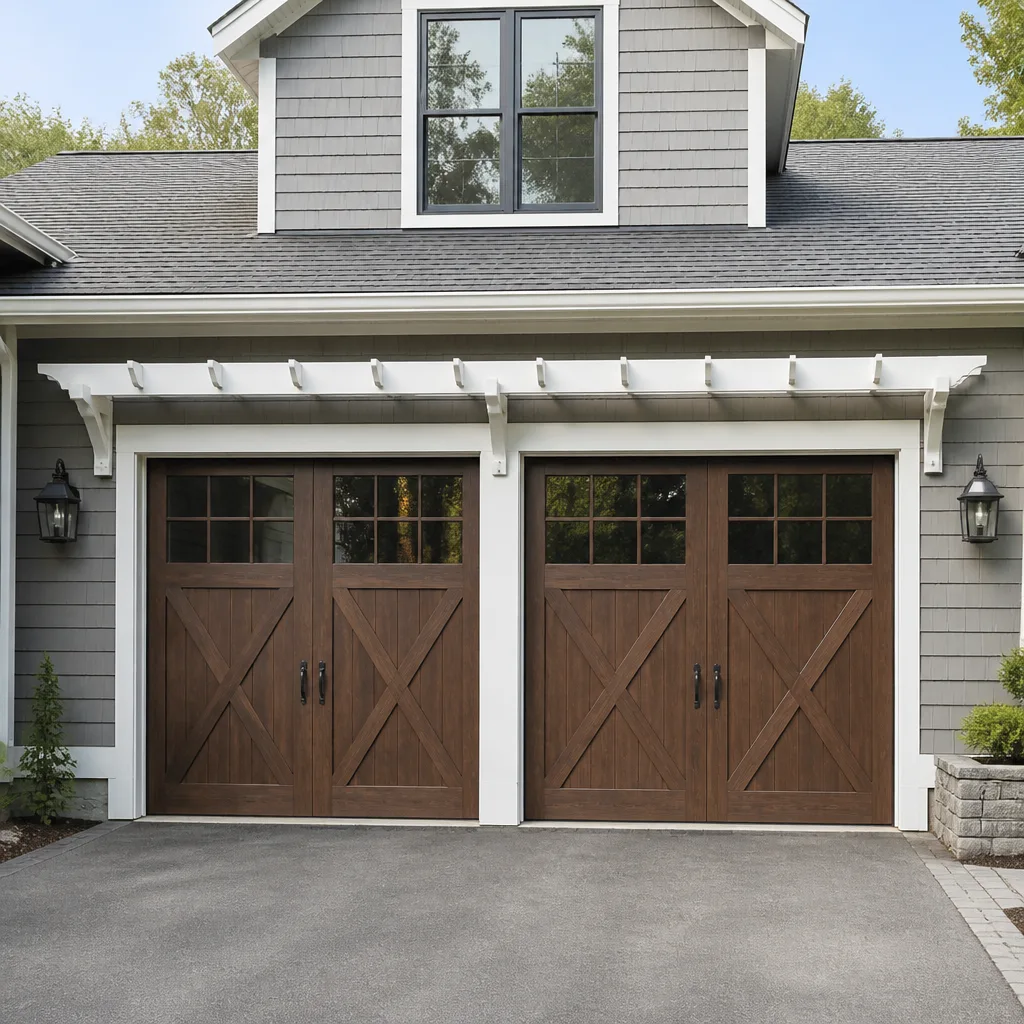 Carriage house
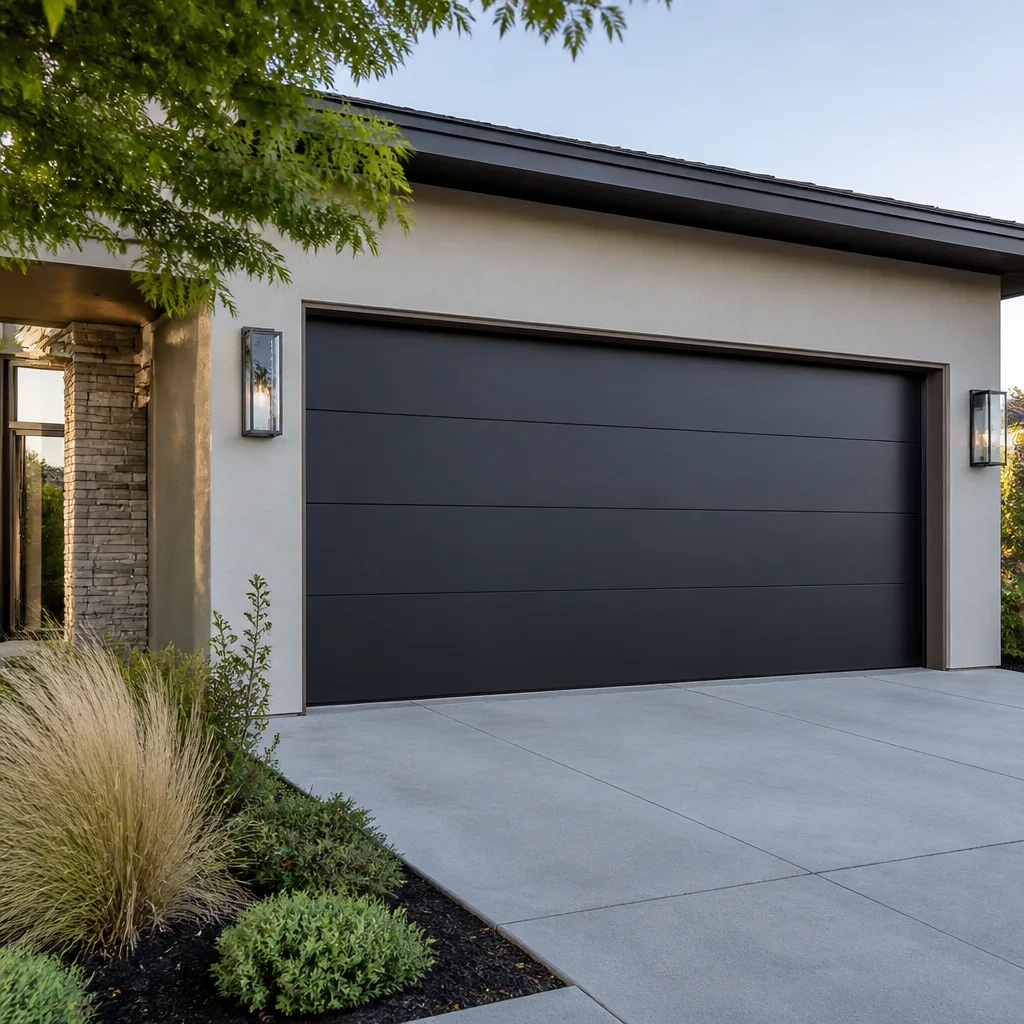 Modern flush
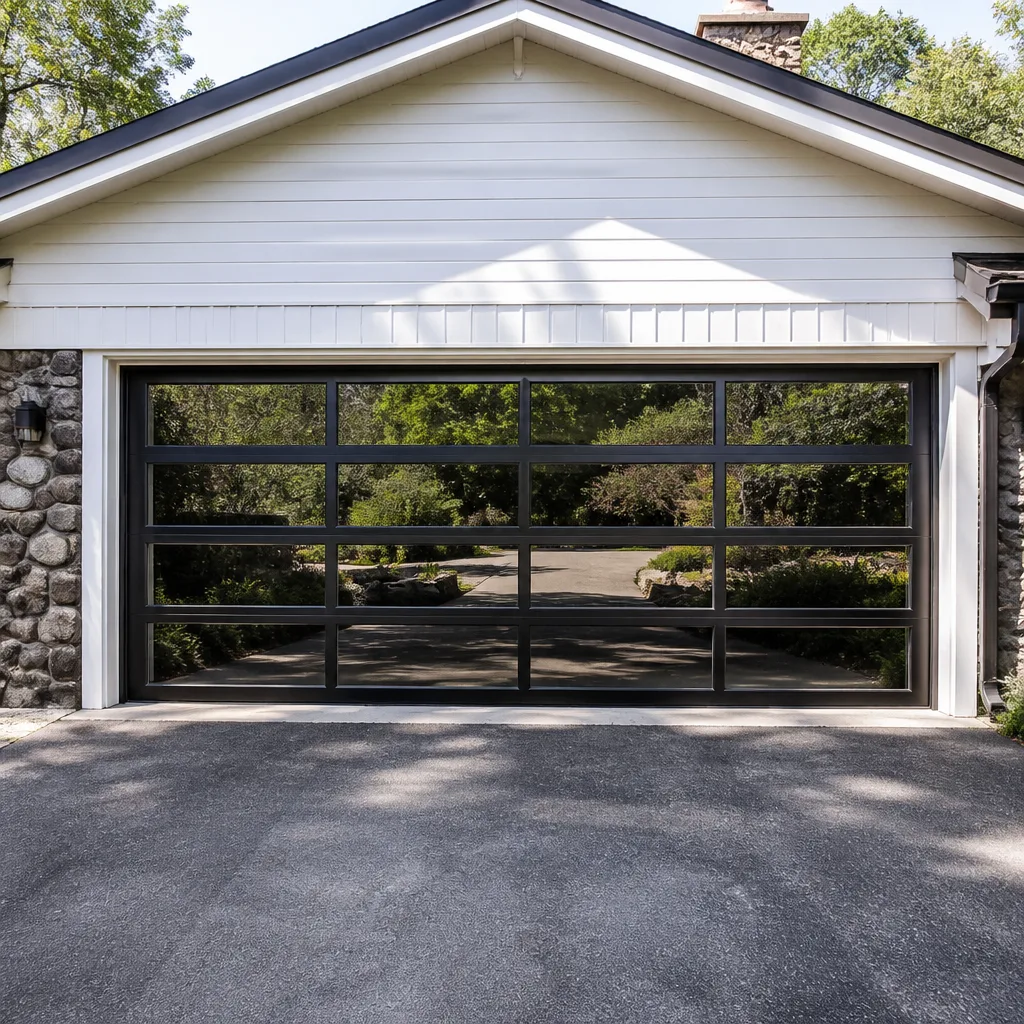 Full-view glass
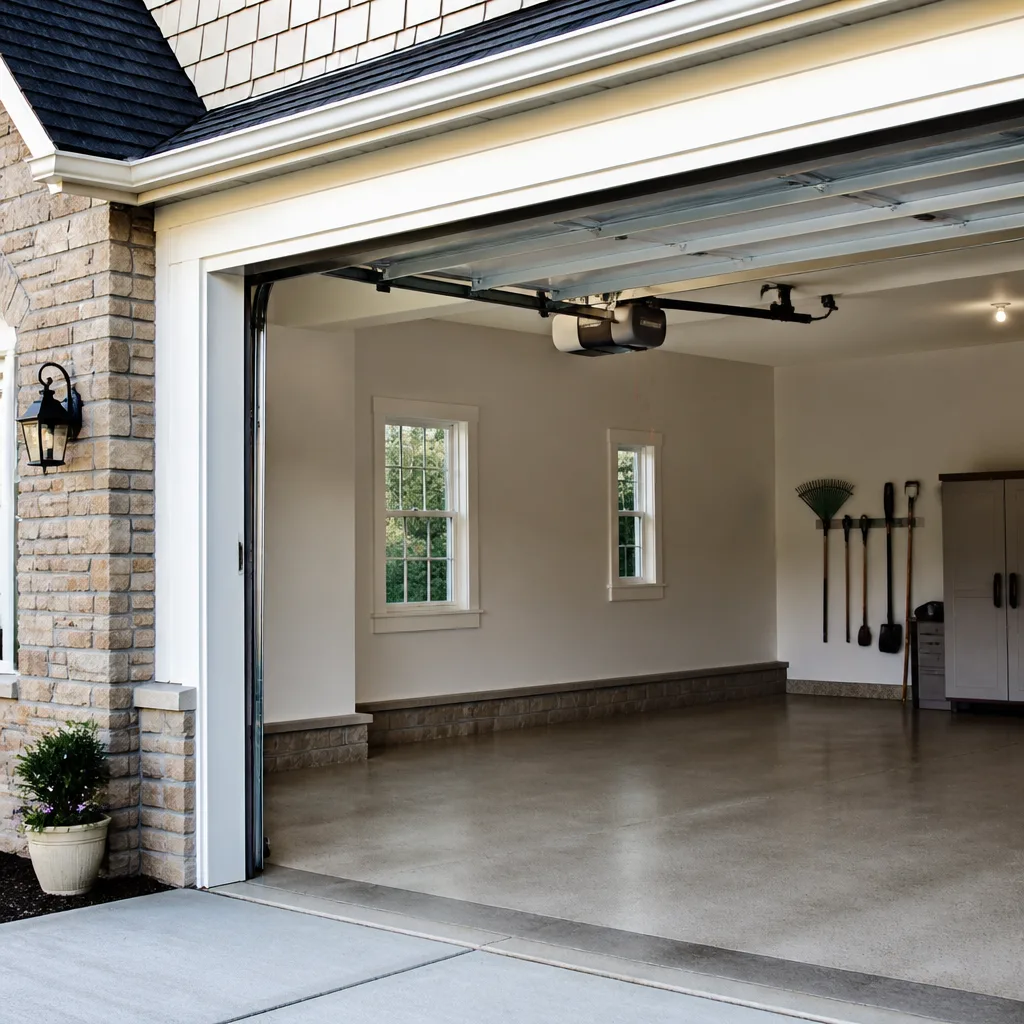 LiftMaster openers
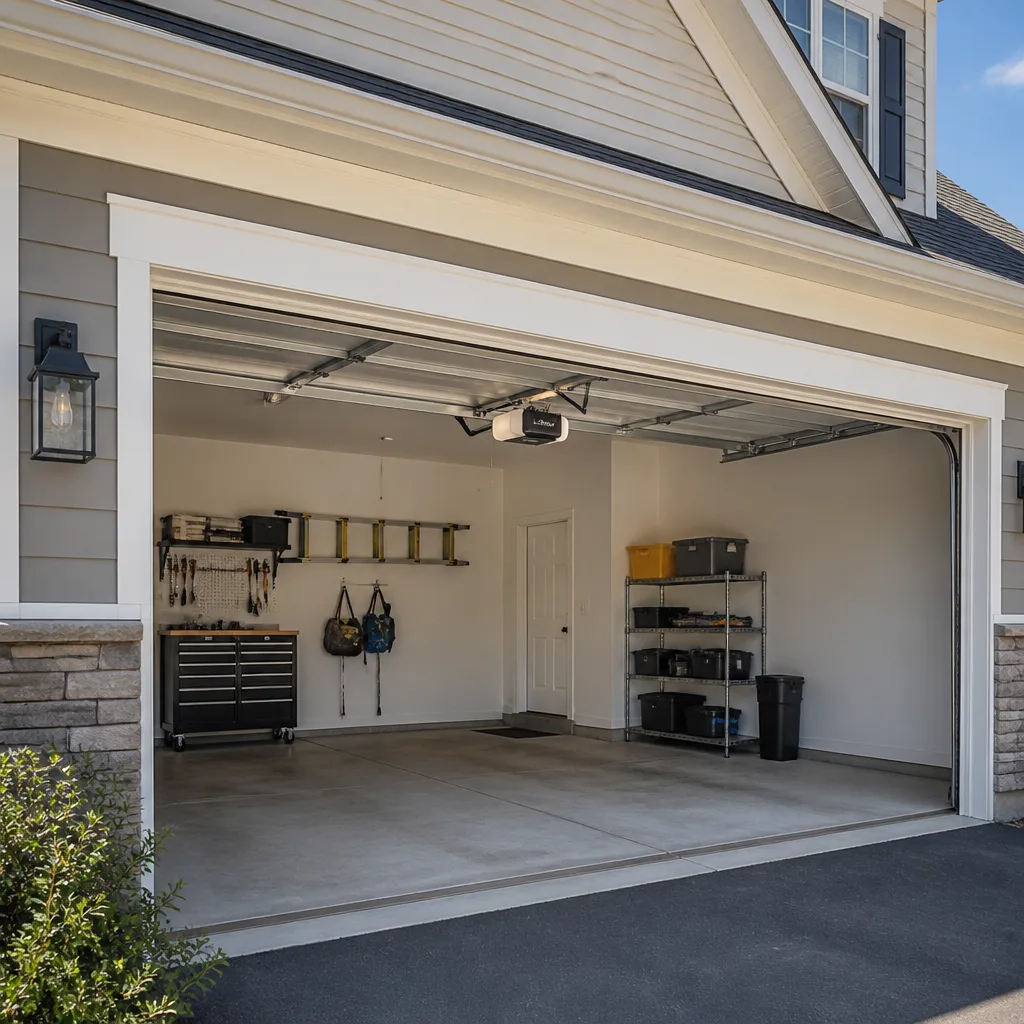 Chamberlain openers
Full 25-point door and opener safety check with every visit - springs, cables, rollers, tracks, and your LiftMaster or Chamberlain opener included
You get a price before we start. It does not change when the pro arrives.
Get your free estimateDIY vs Professional Garage Door: The Hicksville Homeowner’s Decision Guide
Most DIY garage door guides get the danger wrong in one of two directions. Some treat a torsion spring like a stubborn jar lid you just need to muscle open, and others wave you off from even looking at your door because every job is supposedly lethal. Neither is honest. Torsion springs store energy that can cause serious injury the moment tension releases unexpectedly – that’s physics, not a sales pitch. But replacing a bottom weatherstrip, re-engaging a safety sensor, or reprogramming an opener is something plenty of homeowners handle in 20 minutes with a screwdriver. This guide draws the line task by task, so you know exactly which jobs are within reach in Hicksville and which ones you should hand to a technician.
Quick Answer
In Hicksville, the DIY-vs-professional decision comes down to energy and liability, not pride. Springs, cables, and anything involving the torsion assembly are professional jobs because the stored force can injure you badly and a mistake can void insurance coverage on a subsequent claim. Weatherstrips, sensors, opener remotes, and routine lubrication are safe homeowner tasks. Everything in between – bent tracks, opener logic boards, panel replacement – depends on whether you have the right tools and whether a failed attempt creates a more expensive repair.
Styles & brands we work with
- Raised-panel steel
- Carriage house
- Modern flush
- Full-view glass
- LiftMaster openers
- Chamberlain openers
Table of Contents
- How We Draw the Line Between DIY and Professional Work
- Which Garage Door Tasks Are Safe to Do Yourself in Hicksville?
- Which Garage Door Tasks Require a Professional?
- What Tools Do You Actually Need for Garage Door Work?
- What Does a Failed DIY Attempt Actually Cost?
- How Does New York Homeowner’s Insurance Treat a DIY Garage Door Mistake?
- The Middle Path: Diagnose Yourself, Hand Off the Execution
- What Makes Hicksville Garage Doors a Little Different?
How We Draw the Line Between DIY and Professional Work
The dividing line isn’t complexity. It’s stored energy and consequence. A garage door is a balanced system: springs hold the door’s weight so a person (or an opener motor) can raise it with modest effort. A standard single-car door weighs roughly 130 to 150 pounds, and a double door can run 200 pounds or more. The springs carry almost all of that load. When they’re tensioned, they hold force that can release in an instant if a winding cone slips, a cable snaps, or a bracket pulls loose.
That’s why we separate tasks into three tiers instead of two:
- Tier 1 – homeowner-safe. Low force, no stored energy, and a mistake usually just means the task didn’t work. Weatherstrips, sensors, remotes, and lubrication sit here.
- Tier 2 – homeowner-possible, professional-preferred. Moderate risk and moderate cost of failure. Track adjustment, roller replacement, and panel swaps fit here. A careful homeowner with the right tools can sometimes handle these, but the downside is a door that binds or falls out of balance.
- Tier 3 – professional only. Spring replacement, cable replacement, and any adjustment to the torsion assembly. High stored energy, and a single slip can mean a hospital visit.
The reasoning matters more than the verdict. A homeowner who understands why springs are dangerous makes better decisions on the tasks that sit near the line. And a homeowner who knows that a sticking door usually traces back to a balance problem, not a lubrication problem, saves themselves an afternoon of dead-end DIY.
Which Garage Door Tasks Are Safe to Do Yourself in Hicksville?
These are the jobs we’d genuinely tell a neighbor in Hicksville they can take on without worry. None involve stored spring tension, and a mistake usually means a redo, not a repair bill.
Bottom weatherstrip replacement
The rubber seal at the bottom of the door takes a beating from freeze-thaw cycles, and in Hicksville it’s the most common homeowner-replaceable part. New weatherstrip slides into the retainer and trims to length with a utility knife. Expect an hour of work and a modest parts cost at any hardware store.
Safety sensor realignment
If your door reverses immediately after closing, the photo-eye sensors at the bottom of the tracks are likely misaligned or blocked. Wipe the lenses, check that the LED indicator is solid (not blinking), and nudge the brackets until they line up. This is a 10-minute fix that solves a large share of “door won’t close” calls.
Remote and keypad programming
Adding a new remote to a Chamberlain or LiftMaster opener is a matter of pressing the learn button and following the manual. Same for keypads. If you’ve lost the manual, most manufacturers publish it online with the model number printed on the opener’s housing.
Lubrication
A light application of white lithium grease or a silicone-based garage door lubricant on hinges, rollers, and the torsion tube bearing plates (not the springs themselves) keeps things quiet. Once or twice a year is enough for most Hicksville doors. Don’t use WD-40 as a lubricant; it’s a solvent and will attract dust.
Light bulb replacement and basic cleaning
The opener’s light bulb is a standard homeowner task. So is wiping down tracks with a dry cloth to clear grit and debris after a windy stretch.
Which Garage Door Tasks Require a Professional?
Every task in this section involves stored energy, structural load, or high voltage. We include the reasoning because that’s what helps you decide whether to attempt a borderline job yourself. Our stance on these is firm. This is a broad view across the trade, not marketing: spring and cable work is dangerous enough that no honest technician would coach a homeowner through it over the phone.
Torsion and extension spring replacement
A torsion spring is wound to hundreds of pounds of tension. Extension springs are stretched along the top track and can recoil violently if a cable fails. Replacing either without the correct winding bars, understanding of cycle counts, and knowledge of the door’s weight is unsafe. There is no version of this task where the savings justify the risk. Our garage door spring repair service exists because this work needs specialist tools and training, and it’s the single highest-risk job on the garage door.
Cable replacement
The lift cables that spool on the drums at each end of the torsion tube carry the door’s full weight. A snapped cable can whip across the garage with enough force to break a windshield. Even an intact but frayed cable should be replaced by a technician, and the door should not be operated until it is.
Torsion assembly and bracket adjustments
Anything involving the winding cones, drums, or center bearing plate requires the spring to be de-tensioned first. That de-tensioning is itself the dangerous step. Skip this work.
Opener motor or logic board replacement
Newer openers include a capacitor and standard 120-volt connections. If you’re not comfortable working inside a housing with stored charge, replacing a capacitor or control board is a job for a technician. Opener gear-and-sprocket failures, worn trolleys, and travel-limit calibration on a heavier door are also best left to someone who works with the brands daily – see our garage door opener repair page for what a technician checks first.
Track and panel replacement
Bent tracks throw the door out of balance, and forcing a heavy panel out of a bound track can cause the door to drop or the spring to unwind. A skilled DIYer can sometimes swap a single lower panel, but if any track needs realignment, the door has to be retensioned and rebalanced afterward.
What Tools Do You Actually Need for Garage Door Work?
Tool inventory is the honest first filter. If you don’t own the right tools, you’re several hundred dollars into a DIY project before you’ve touched the door. More importantly, the absence of a tool is often the signal that the task is outside your lane.
Tools required for safe DIY work
- Screwdriver set (Phillips and flathead)
- Adjustable wrench
- Utility knife (for weatherstrip)
- White lithium grease or garage door lubricant
- Level (for door-square checks)
- Tape measure
- Step ladder
Tools that signal “professional job”
- Winding bars. Sold in pairs, machined for a specific spring size. If you don’t own these, you don’t have any business touching a torsion spring.
- Locking pliers or locking clamp to secure the door during spring work.
- A torque-aware drill or impact wrench for lag bolt and bracket work.
- Door balance scale or spring scale to test lift effort after adjustments.
- Multimeter for opener diagnostics on the low-voltage side.
If you’re missing a tool from the second list, that’s your answer. Don’t buy winding bars for a one-time job. The hardware cost alone can exceed a professional estimate, and the tool doesn’t come with the training. If you already own everything on the second list and have done garage door work before, you may be equipped for track adjustment or roller swaps – but even then, stay away from the torsion assembly.
What Does a Failed DIY Attempt Actually Cost?
The real cost of a garage door DIY attempt isn’t the parts. It’s the cleanup. When a homeowner attempts a spring or opener repair and it goes sideways, the follow-up repair often costs more than the original professional job would have, for three reasons:
- Voided opener warranty. Most manufacturers (including LiftMaster, Chamberlain, and Craftsman) void their warranty if damage traces to unauthorized repair. A fried logic board from a reversed polarity connection is rarely a cheap replacement.
- Secondary damage to tracks, panels, or cables. A door that falls out of balance takes panels and tracks with it. What started as one problem becomes three.
- Premium labor for diagnosis. A technician fixing someone else’s repair first has to reverse-engineer what went wrong. We see this often in Hicksville, and it means billable time that a clean job wouldn’t have required.
An accurate estimate for a professional spring job on a single-car door in the Hicksville area typically lands somewhere in the four-hundred-dollar range for a matched pair, and a full opener replacement usually sits in the several-hundred-dollar range depending on brand and features. The exact figure depends on your door and your opener, so we write a written estimate before any work starts. That’s the price you pay. It doesn’t move because the technician opened the door and found a different spring than expected. It’s set per job, before the first tool comes out.
How Does New York Homeowner’s Insurance Treat a DIY Garage Door Mistake?
Most standard homeowner policies in New York cover sudden and accidental damage, but the coverage isn’t unconditional. Insurers typically ask how the damage happened, and a repair performed by an unlicensed homeowner that then failed can complicate a claim. Two situations specifically tend to create problems:
- Personal injury from failed spring or cable work. If the injury is to a household member, medical payments coverage may apply, but if the damage traces to a non-professional repair, the insurer will investigate whether the work was negligent. Claims can be denied or reduced.
- Damage to a third party or third-party property. A failed door that injures a visitor or damages a neighbor’s vehicle puts you in liability territory. Your insurer will look at whether the repair was done by someone qualified. A documented professional job gives the claim a clean path.
We’re not your insurance advisor, and every policy is different. But we’ve seen enough claims talk to know that the one sentence insurers want to hear most is: “A licensed garage door technician did the work.” That’s the only reason we mention it. It’s not a scare tactic. It’s the reality of how claims review works in New York.
Another angle worth knowing: many condos and HOAs in Hicksville have rules about garage door work. If your unit shares a wall or a slab with a neighbor, the management company may want you to use a licensed vendor. Check before scheduling – it’s cheaper to find out now than after the fact.
The Middle Path: Diagnose Yourself, Hand Off the Execution
The DIY-vs-pro debate usually misses the best option, which is a hybrid. A homeowner can do a lot of diagnostic and prep work that reduces the total labor cost of a professional repair, without touching anything dangerous. Here’s how that works.
What you can do before calling
- Note the door’s behavior. Does it open evenly or lurch? Does it reverse immediately after contact or reverse only after closing? The pattern narrows the cause.
- Check the safety sensors. Are the LEDs solid or blinking? A blinking sensor LED almost always means a misalignment or obstruction.
- Test the manual release. Pull the red cord to disengage the opener and lift the door by hand. If it’s very heavy or very stiff, the springs are likely the problem, not the opener.
- Listen for the opener. A humming motor that doesn’t move the door usually points to a stripped gear or a failed capacitor, not a spring.
- Record the model and serial number. The sticker on the opener’s housing tells the technician exactly which parts to bring.
When you call us with that information, the technician arrives prepared for the actual failure instead of spending the first 15 minutes diagnosing it. That can trim real time from the bill. It also means you’re not paying professional rates for work you can do yourself. If you’re not sure what you’re looking at, describe it anyway – our technicians have up to 12 years of experience, and a clear description of the symptoms usually narrows things down fast.
For hands-on work that belongs to a pro, our garage door repair service covers everything from opener diagnostics to track and panel work. If you’re dealing with a stuck door, a snapped spring, or an opener that won’t respond, and you’re not sure whether to attempt it or call, a quick phone call is the cheapest way to find out.
What Makes Hicksville Garage Doors a Little Different?
Hicksville’s housing stock spans mid-century ranches, split-levels, and post-war capes, plus newer construction on the edges of town. Most of the older homes have single-car garages with 7-foot doors and 25-inch-tall panels. A lot of them still have original extension springs on doors that have been rebalanced once or twice over the years. Newer homes on Long Island tend to be built with torsion springs, and the openers skew toward Chamberlain and LiftMaster.
Weather matters here too, just not in the way most garage door sites pretend. Long Island’s freeze-thaw cycle – cold nights, warmer afternoons – stresses the bottom weatherstrip and door seals repeatedly through winter and early spring. A seal that looks fine in July can develop gaps by February. Replacing it early keeps water off the slab and out of the garage, which matters more here than in a warmer climate.
Humidity in summer also affects wooden doors more than steel ones. If your door is wood, expect to check the finish every couple of years and re-seal as needed. The paint or stain is your defense against moisture. That’s not a professional job, but it is a homeowner one worth doing.
The other thing we hear from Hicksville homeowners is brand confusion. A door might have a Raynor panel set with a Chamberlain opener installed a few years later by whoever was doing the previous repair. When a failure happens, the homeowner often calls the opener brand’s number and gets routed to a general line. We’re familiar with 8 leading garage door and opener brands – LiftMaster, Chamberlain, Genie, Clopay, Amarr, Wayne Dalton, Craftsman, and Raynor – which means we can work on whatever mixing of equipment is already in your garage. If you ever need repair on a mismatched setup, that’s the situation we see most.
Common Mistakes to Avoid
- Buying winding bars online and attempting your own spring swap. The tool doesn’t include the training. Two winding bars and a video are not a professional spring job, and a slip can send you to the ER. This is the mistake we most want to prevent.
- Using WD-40 on the tracks or springs. It’s a solvent, not a lubricant. It strips existing grease and attracts grit. Use white lithium grease on hinges and rollers instead.
- Assuming a reversing door means a bad opener. Half the “door reverses” calls we get in Hicksville trace to a misaligned safety sensor, not an opener fault. Wipe the lenses and check the LED first.
- Forcing a stuck door up or down. If the door is bound in the tracks, forcing it can bend a panel or snap a cable. Disengage the opener and stop.
- Ignoring a frayed cable. Cables fray before they fail, and the failure is violent. If you see a broken strand, stop operating the door.
- Not clearing the garage floor before a technician arrives. Cables, bike racks, and stored equipment near the door get in the way of safe work. Clearing a 3-foot perimeter around the door saves time.
- Skipping the HOA check. Some Hicksville townhouse complexes and co-ops require licensed-vendor documentation. Call your management company first; it’s faster than a redo.
See the difference
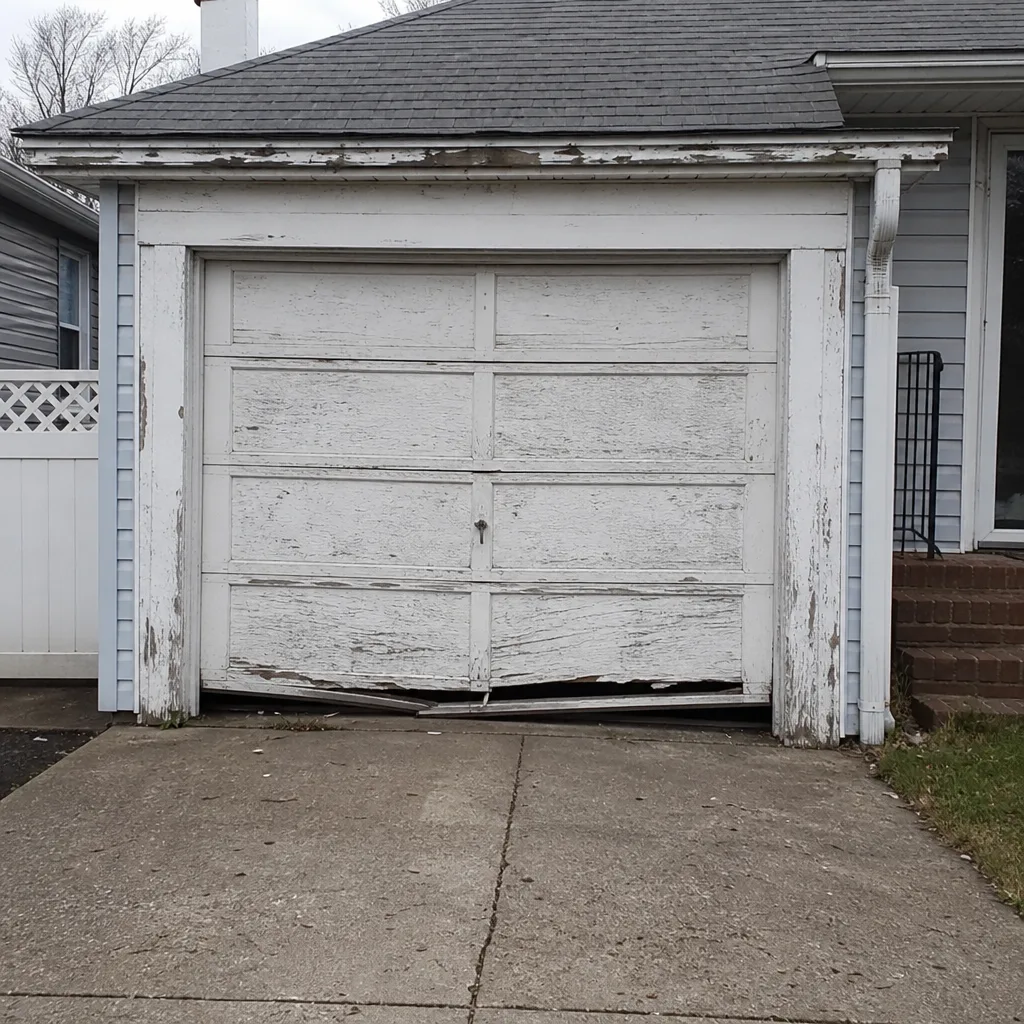 Before
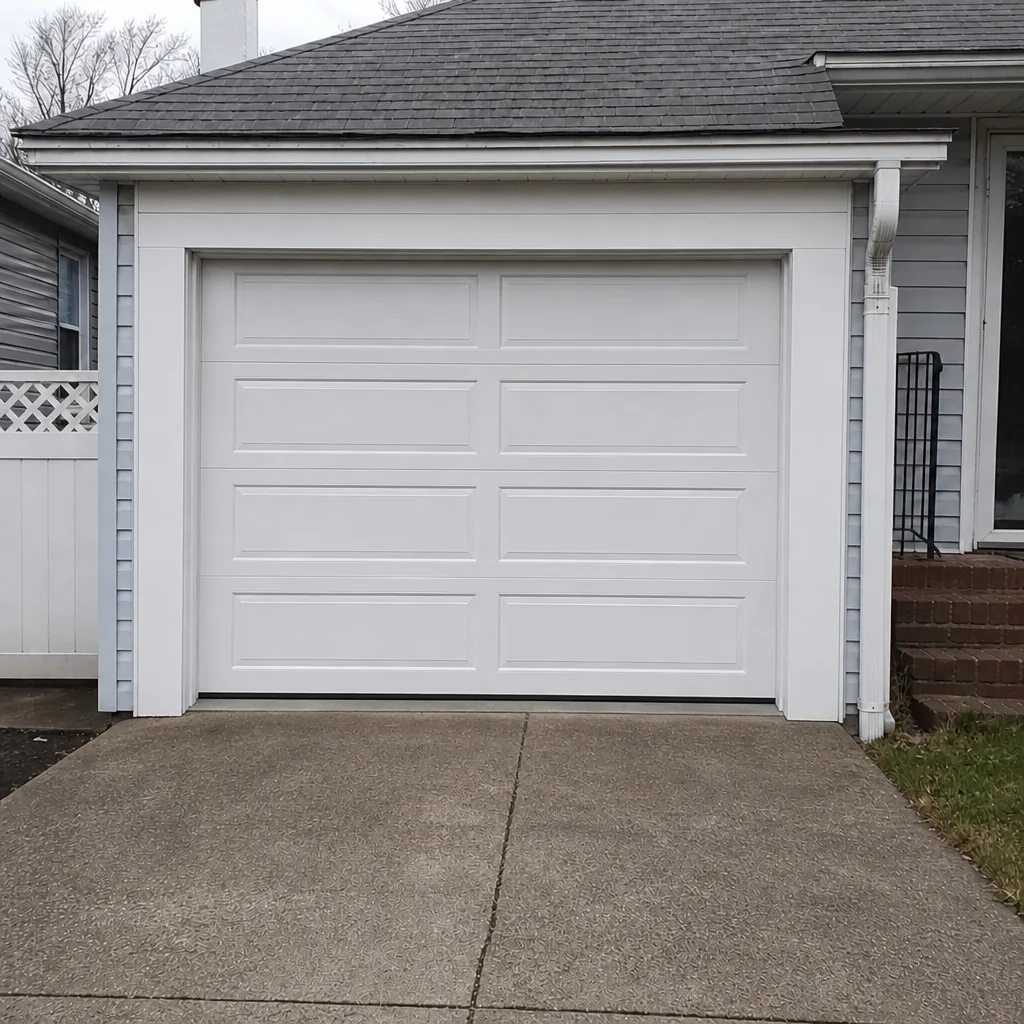 After
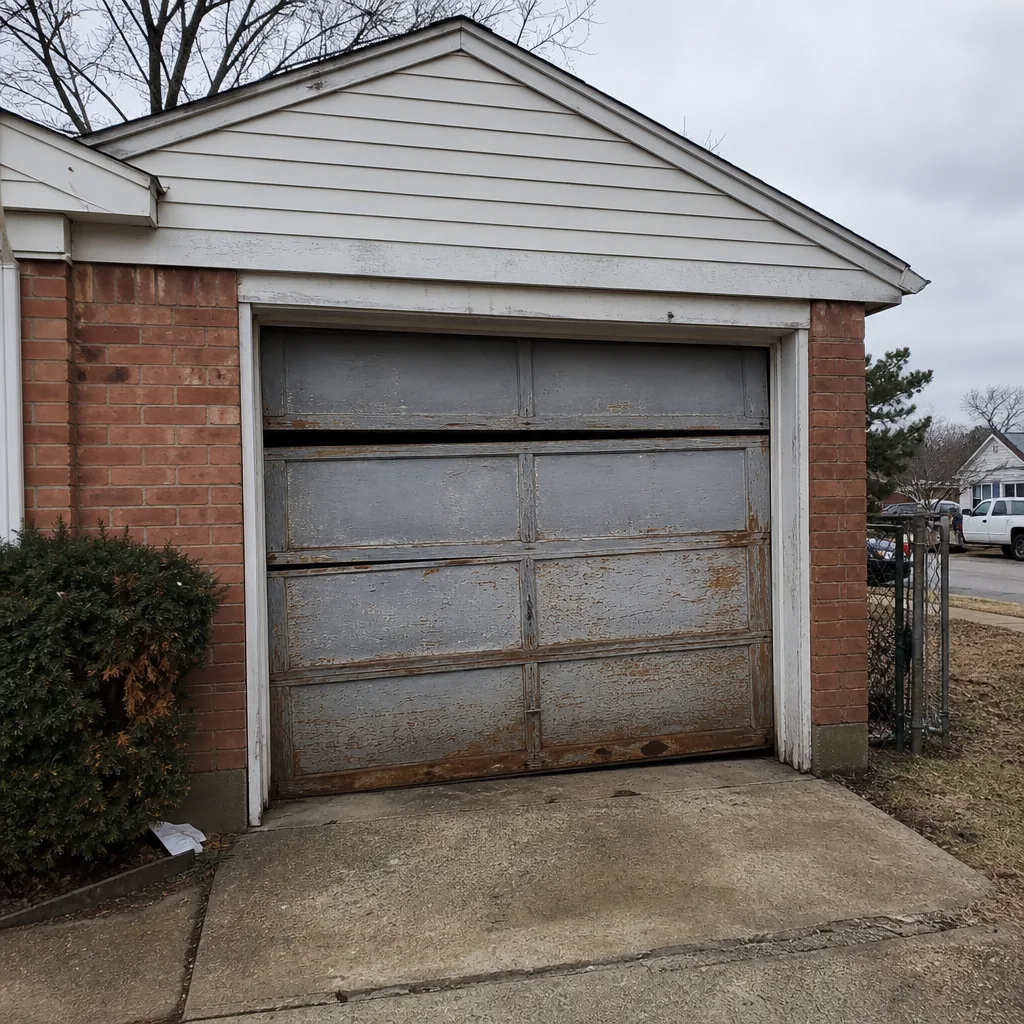 Before
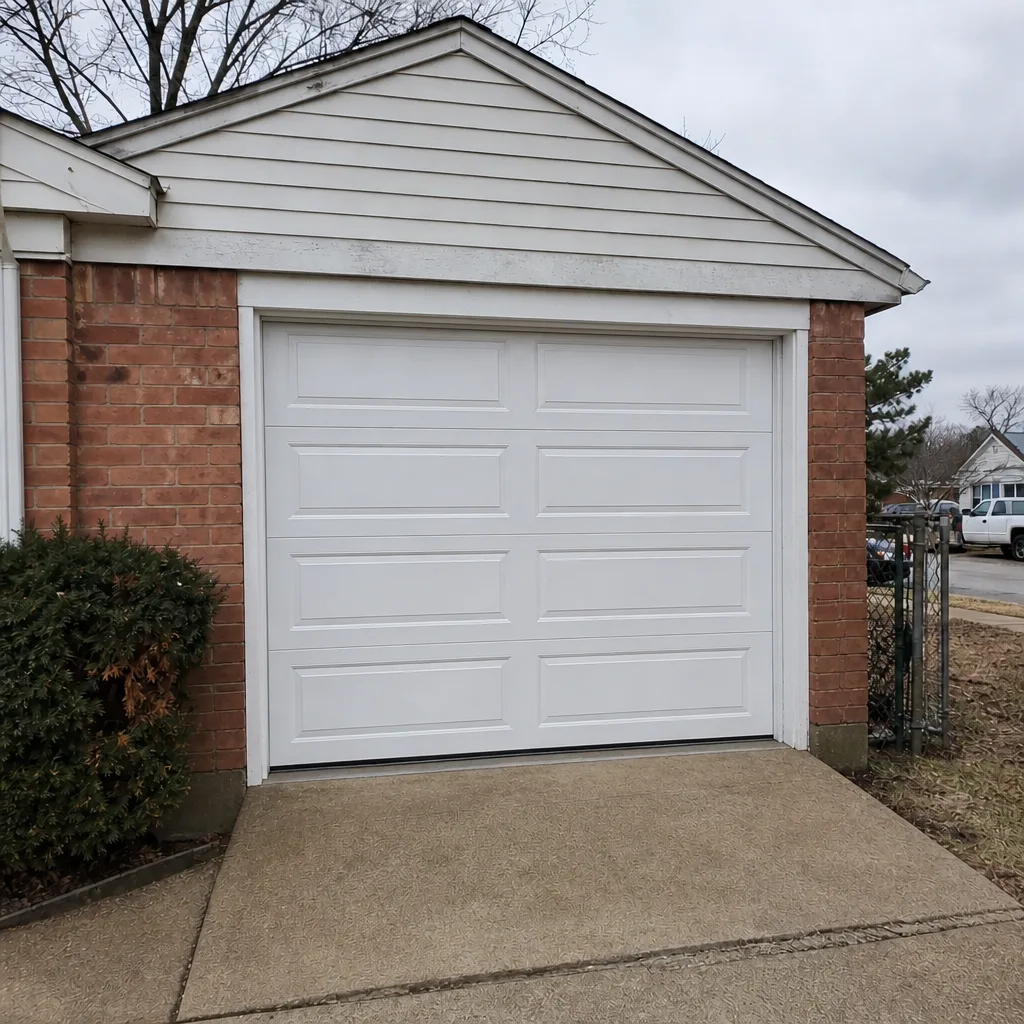 After
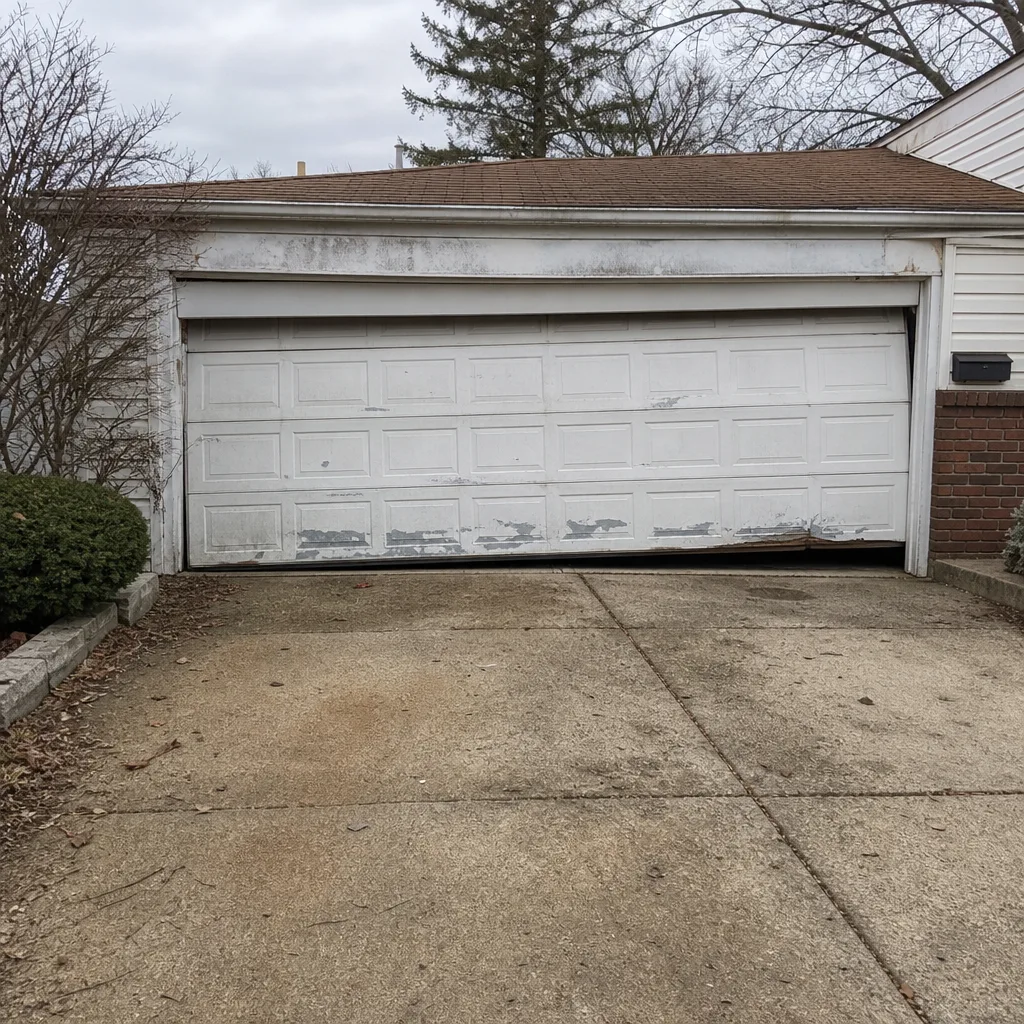 Before
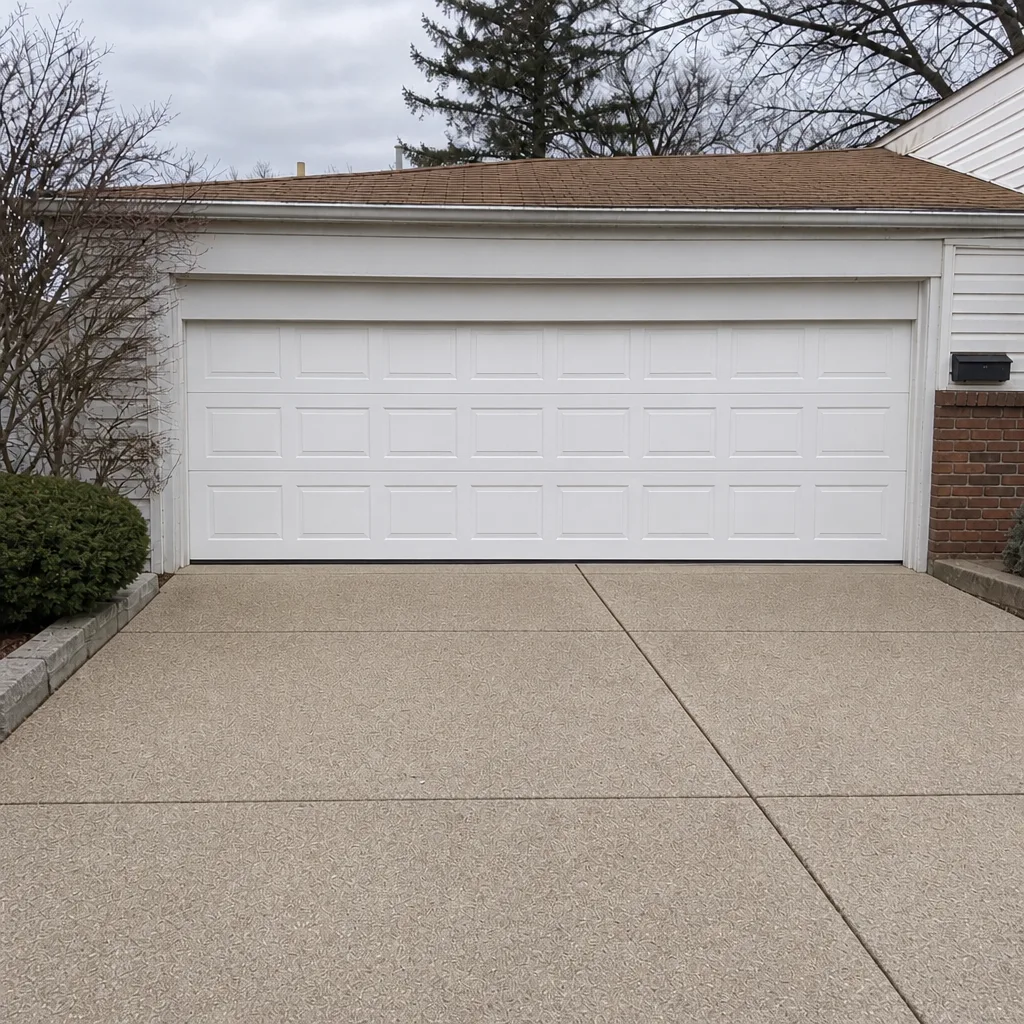 After
When to Call a Professional
Call a professional when the job involves any stored spring energy – a snapped spring, a stuck door, a broken cable, a garage door hanging crooked – when the opener motor is dead, when the door won’t stay down, or when the door has clearly been hit by a car or a bicycle and the panel or track is bent. Also call if you’ve already attempted a repair and the door isn’t working right. The follow-up costs more than the initial fix would have.
Hicksville Garage Door Repair Pros offers free estimates in Hicksville. Call (888) 891-6453. We answer 24/7. Fast dispatch from 7am to 7pm, Sunday through Friday. Our technicians have up to 12 years of experience across LiftMaster, Chamberlain, Genie, Clopay, Amarr, Wayne Dalton, Craftsman, and Raynor equipment, and the price is written in the estimate before any work starts. If you need a full replacement, we also handle garage door opener repair and complete new installation through the same team – one call covers everything from a snapped spring to a full new door.
Frequently Asked Questions
No, and we’d say the same thing anywhere. Torsion springs carry hundreds of pounds of stored tension, and releasing that tension without the right tools and technique can cause serious injury. Hillside village codes in Nassau County don’t require a permit for the repair itself, but that doesn’t make the task safe. Our garage door spring repair is the specialist job we’d recommend you call for – and if the spring is already snapped, keep the door closed and call us at (888) 891-6453.
A single spring replacement typically runs around $180 to $340 depending on door size, spring type, and the specific failure. A matched pair is usually replaced together, so a pair costs about twice that. Our written estimate sets the final price before any work starts. Call (888) 891-6453 for an exact quote, and the estimate is free.
The local professionals we connect you with are licensed and insured as their state requires, and we can work with your insurer if a claim becomes part of the repair. Ask for documentation when you book, and expect to see it. Call (888) 891-6453 for details before scheduling.
Yes, if it’s a repair-call situation. Same-day service is common when the door is stuck open, the spring has snapped, or the opener has failed. Call (888) 891-6453. We answer 24/7. Fast dispatch from 7am to 7pm, Sunday through Friday, closed Saturday. If you reach us outside dispatch hours, we’ll book you into the next opening. Spring and opener repair is usually the same day. Full replacement is a measurable, scheduled project, so we quote it and set a date instead of promising same-day.
No. The written estimate is the price. If we quote a spring pair and arrive to find the door’s tracks are also bent, we’ll tell you before touching anything and re-quote only with your approval. We don’t give an invoice bigger than the estimate. Call (888) 891-6453 for a free written estimate.
Often yes, if the damage traces to the repair. Manufacturers including Chamberlain and LiftMaster void their warranties on a unit that’s been opened by an unauthorized party or wired incorrectly. That’s one of the strongest reasons to hand off opener work to a technician who knows the brand. Call (888) 891-6453 if you’re unsure whether your opener is still covered.
The Bottom Line
The garage door debate isn’t really about saving money. It’s about knowing which tasks carry risk you can’t take back. Weatherstrips, sensors, remotes, and lubrication are genuinely homeowner tasks – do them, and don’t pay us for them. Springs, cables, torsion work, and opener electronics are professional-only, because the physics of stored energy doesn’t respect a homeowner’s confidence or a YouTube tutorial. The middle path is where the real savings live: diagnose what you can, describe it clearly when you call, and let a specialist handle the dangerous work with the right tools. In Hicksville, that means faster service, a fairer bill, and a door that behaves the way it should.
If you’re not sure which side of the line your repair falls on, call Hicksville Garage Door Repair Pros at (888) 891-6453. We answer 24/7. Fast dispatch from 7am to 7pm, Sunday through Friday, closed Saturday. Estimates are free, and the price is agreed before any work starts.
Written by the team at Hicksville Garage Door Repair Pros.